EV vs petrol car in India: the real 5-year cost breakdown (2026)
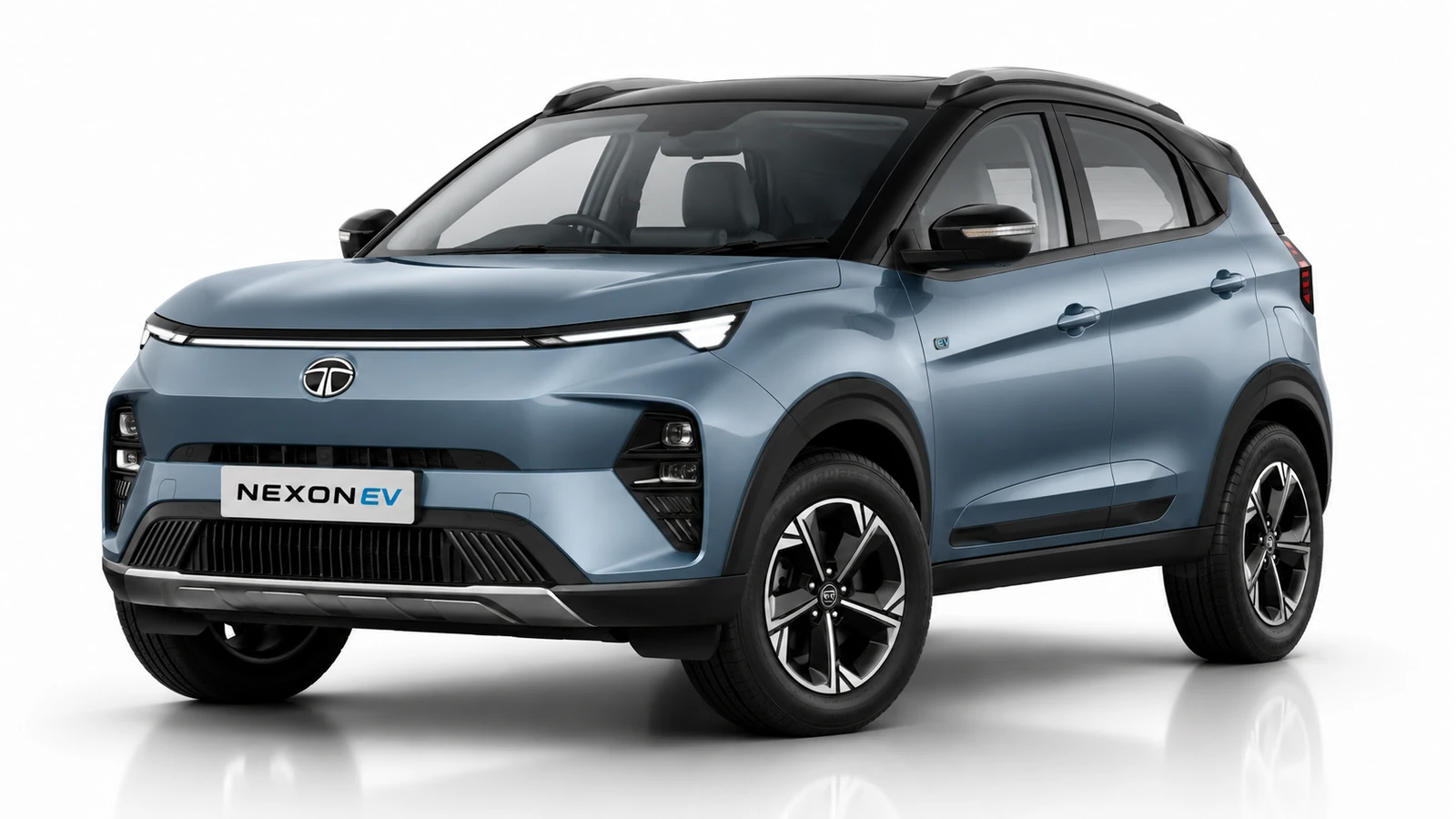
The honest answer to "is an EV cheaper" depends on one question that has nothing to do with the car: can you charge where you park? Everything else follows from that. This guide works through the real five-year numbers for Indian conditions.
The short answer
- With home charging: roughly ₹0.90–1.30 per km, against ₹6–8 for petrol. Break-even typically in 3–5 years.
- Without home charging: roughly ₹2.60–3.60 per km on public DC. Still cheaper than petrol, but break-even stretches beyond five years.
- Under ~700 km a month: the purchase premium may never pay back. Buy an EV because you want one, not to save money.
1. Fuel vs electricity — the daily cost
This is where the entire case is won or lost.
| How you charge | Rate per unit | Cost per km | 1,200 km/month |
|---|---|---|---|
| Home, separate EV meter | ₹4.5–6 | ₹0.65–0.90 | ₹780–1,080 |
| Home, domestic tariff | ₹6–9 | ₹0.90–1.30 | ₹1,080–1,560 |
| Mixed (80% home, 20% public) | — | ₹1.30–1.75 | ₹1,560–2,100 |
| Public DC fast only | ₹18–25 | ₹2.60–3.60 | ₹3,120–4,320 |
| Petrol car | — | ₹6–8 | ₹7,200–9,600 |
An owner charging mostly at home saves roughly ₹6,000–8,000 a month on a typical 1,200 km. Over five years that is ₹3.6–4.8 lakh — usually more than the purchase premium.
An owner relying entirely on public fast charging saves closer to ₹4,000 a month. Real, but a different calculation.
Estimate your own figure with the home charging cost calculator.
2. Maintenance
An electric drivetrain removes most of what a service bill consists of: no engine oil or filter, no air filter, no spark plugs, no timing belt, no clutch, no exhaust. Regenerative braking means pads last far longer than on a petrol car.
What remains is tyres, brake fluid, cabin filter, battery coolant and suspension wear. Owners typically report annual service costs 60–70% lower than an equivalent petrol car — roughly ₹3,000–6,000 a year against ₹10,000–18,000.
One caveat: EV-qualified technicians are concentrated in metros. Outside them, a straightforward repair can mean a long wait. Check your nearest service centre before buying, particularly for newer brands.
More detail in our EV maintenance cost guide.
3. The purchase premium — and what offsets it
An electric car still costs more upfront than a comparable petrol model, though the gap has narrowed considerably. Two things reduce it:
Road tax and registration. Several states waive these entirely for EVs. Under the Delhi EV Policy 2026, electric cars up to ₹30 lakh ex-showroom pay no road tax and no registration fee — worth well over a lakh on a ₹20 lakh car. Rates vary widely by state; check EV subsidies by state.
Scrappage incentives. Delhi offers up to ₹1 lakh when you scrap an eligible old vehicle and buy a new electric car.
Together these can cut the effective premium substantially, and they apply at purchase rather than accruing over years.
4. Break-even, by how much you drive
| Monthly distance | Monthly saving (home charging) | Typical break-even | Verdict |
|---|---|---|---|
| 500 km | ~₹2,800 | 7+ years | Buy for preference, not savings |
| 800 km | ~₹4,500 | 5–6 years | Marginal |
| 1,200 km | ~₹7,000 | 3–5 years | Clear case |
| 2,000 km | ~₹11,500 | 2–3 years | Strong case |
| 3,000 km+ | ~₹17,000 | Under 2 years | Obvious |
Assumes home charging on a domestic tariff, petrol at ₹6–8 per km, and a purchase premium of roughly ₹3 lakh. Adjust for your own numbers in the calculator.
5. Resale and battery life
These are the two genuinely uncertain lines.
Battery. Indian manufacturers typically warrant packs for eight years or 160,000 km. Fleet data suggests modern packs hold roughly 85–90% capacity at that point — gradual range loss, not failure. Plan for a car that does 10–15% less range in year eight, not a replacement bill. See our battery life and warranty guide.
Resale. The Indian EV used market is young and the data is thin, which is itself the risk. Early signals suggest brands with wide service networks hold value better, and that battery health certification matters more than odometer reading at resale. Treat this as the least predictable part of the calculation. More in our EV resale value guide.
When petrol still wins
Three situations where the honest recommendation is not an EV:
- You cannot charge where you park. This is the decisive factor. Without home or workplace charging, an EV becomes a weekly errand and the savings halve.
- You drive under about 700 km a month. The premium may never pay back.
- You regularly drive long distances on thin-charging routes. The time cost of charging stops is real and does not show up in any cost table.
In the first case especially, a strong hybrid captures much of the efficiency benefit without the charging dependency — though hybrids are excluded from most EV subsidies, including Delhi’s.
See exactly what an EV saves you
Enter your daily km and get your 5-year cost, savings and break-even in 30 seconds.
Open the calculator →Related guides
- How much does it cost to charge an electric car in India?
- EV maintenance costs in India
- EV vs hybrid car in India
- EV vs CNG car in India
- Is it worth buying an EV in India?
- EV resale value in India
- EV subsidies by state
- Browse all electric vehicles in India
Frequently asked questions
All costs are indicative and vary by state electricity tariff, fuel price, driving style and vehicle. Figures assume Indian conditions in 2026. Last updated 15 August 2026.