Tata Nexon EV vs Tata Curvv EV: which Tata should you buy?
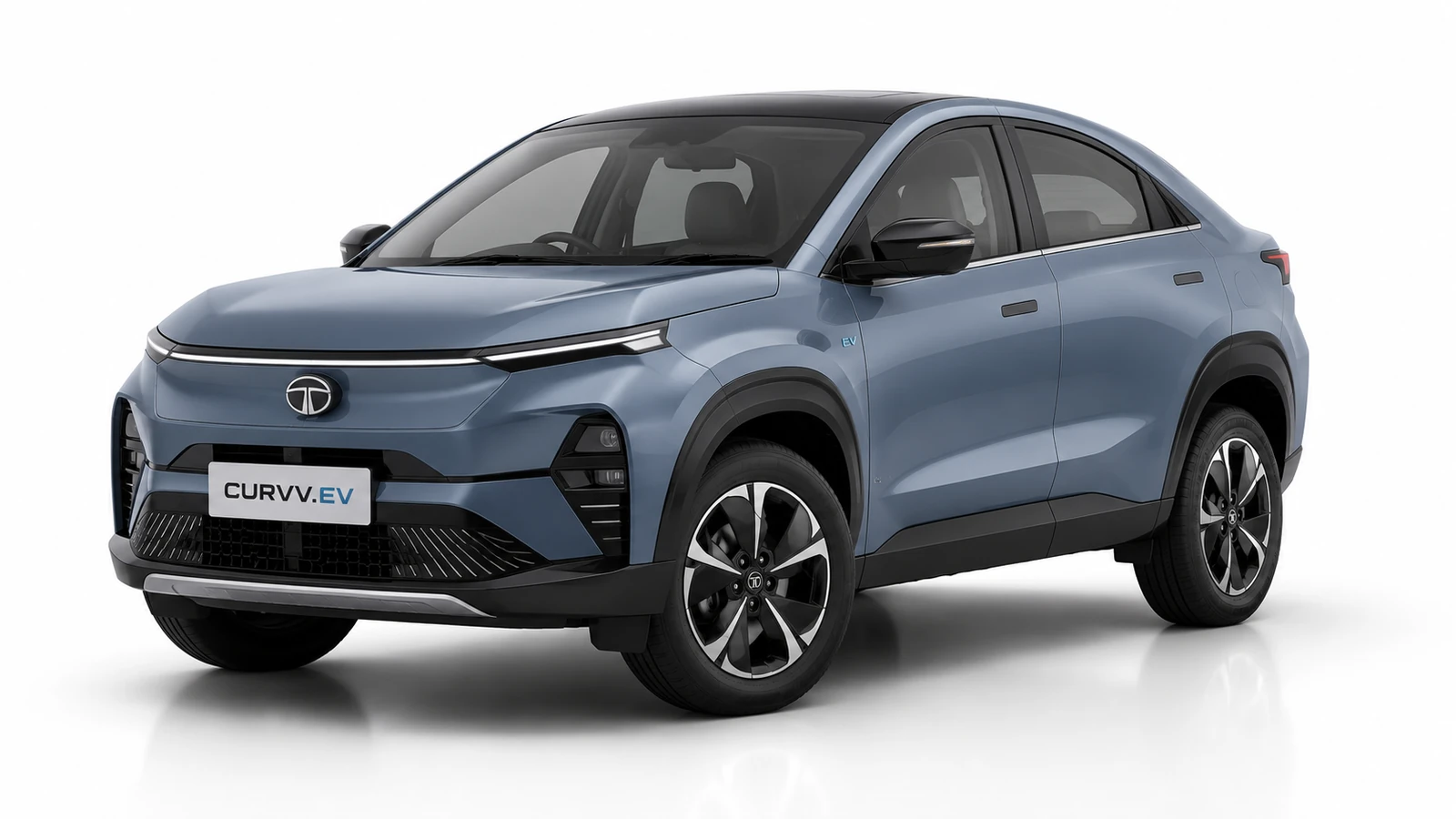
Tata now sells two electric SUVs that sit ₹5 lakh apart and answer very different questions. The Nexon EV is the proven volume seller. The Curvv EV is the one with the big battery and the coupe roof — and a claimed range that nearly doubles it.
Head to head
| Tata Nexon EV | Tata Curvv EV | |
|---|---|---|
| Price (ex-showroom) | ₹12.49L – ₹17.49L | ₹17.49L – ₹22.24L |
| Claimed range | 325 km | 585 km |
| Real-world range | 234–260 km | 421–468 km |
| Battery | 45 kWh | 55 kWh |
| Power | 142 bhp | 165 bhp |
| Top speed | 150 km/h | 160 km/h |
| DC fast charge (10–80%) | 40 min | 40 min |
| Seats | 5 | 5 |
| Body | SUV | Coupe SUV |
The gap that decides it: range
585 km claimed against 325 km is not an incremental difference — it is a different kind of car. In real Indian conditions you are looking at roughly 421–468 km from the Curvv against 234–260 km from the Nexon.
Practically: the Nexon EV is a city car that can do a highway run with a planned stop. The Curvv EV is a highway car that happens to be excellent in the city. If you drive Delhi–Jaipur, Mumbai–Pune or Bengaluru–Mysuru with any regularity, that distinction is worth the ₹5 lakh on its own.
What the Curvv costs you
Rear headroom. The coupe roofline looks superb and it takes real headroom out of the back seat. Tall adults sitting behind will notice. The Nexon's conventional roof is simply more practical.
Price. ₹17.49L – ₹22.24L against ₹12.49L – ₹17.49L. At the top of each range that is close to ₹5 lakh, which buys a lot of charging.
Rear visibility. A consequence of the same roofline. The camera does the work.
What the Nexon still does better
Nothing about the Nexon EV is embarrassed by this comparison. Same 40-minute fast-charge time as the Curvv, the same platform underneath, the same service network, better rear headroom and a lower price. It remains India's most sensible electric SUV.
Running cost
Both cost roughly ₹0.90–1.30 per km on home charging. The Curvv's 55 kWh pack costs more to fill than the Nexon's 45 kWh — but it also goes much further, so per kilometre there is little in it. The Curvv is not more expensive to run; it is more expensive to buy.
Work out your own numbers
Enter your daily km and get your 5-year cost, savings and break-even in 30 seconds.
Open the calculator →The verdict
- Buy the Nexon EV if your driving is mostly urban, if rear headroom matters, or if you want the lowest sensible entry into a Tata electric SUV.
- Buy the Curvv EV if you regularly drive intercity, if range anxiety is the thing stopping you buying an EV, or if you want the more striking car and can absorb the price.
The honest summary: the Nexon EV is enough car for most people. The Curvv EV is the one that removes the last practical objection to going electric, and charges you for it.
Related guides
- Tata Nexon EV vs MG Windsor EV
- Longest range electric cars in India
- Best electric SUVs in India
- How much EV range do you actually need?
- Compare any two EVs side by side
- All Tata electric vehicles
Frequently asked questions
Prices are ex-showroom and indicative. Range figures are manufacturer-claimed unless stated otherwise; real-world range in Indian conditions is typically 72–80% of claimed. Costs vary by state tariff, fuel price and driving style. Last updated 26 August 2026.