Best electric SUVs in India (2026): every budget ranked
⚡ Quick Verdict: Best Electric SUVs Under ₹25 Lakh in India (2026)
The top electric SUVs under ₹25 Lakh are the Tata Curvv EV (45–55 kWh, up to 585 km claimed), Tata Nexon EV 45 (45 kWh, 489 km claimed, starting at ₹12.49L), MG ZS EV (50.3 kWh, 461 km claimed), and Mahindra XUV400 EL Pro (39.4 kWh, 456 km claimed). Both Tata models feature 5-star BNCAP safety ratings and V2L capabilities.
SUVs dominate Indian car buying, and in 2026 the electric SUV line-up finally spans every budget — 33 models from ₹9.69L to ₹133L. This guide ranks them by price band, with realistic range estimates alongside the claimed figures, because the gap between the two is where most buyers get caught out.
The short answer
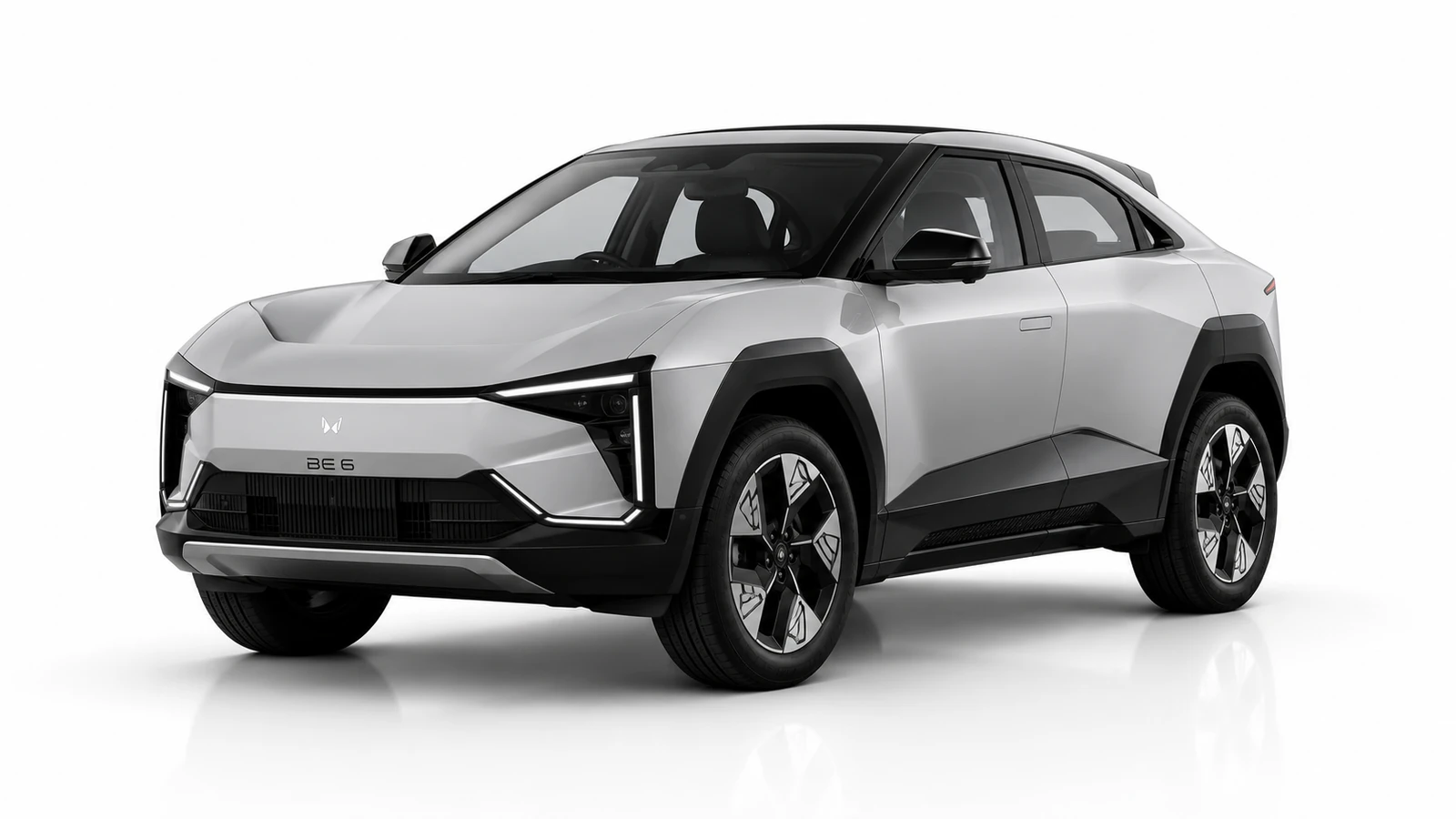
- Best overall under ₹25 lakh: Mahindra BE 6 — 682 km claimed, 20-minute fast charging.
- Best under ₹15 lakh: Tata Punch EV at ₹9.69L.
- Longest range of any electric SUV: Mercedes-Benz EQS SUV — 820 km claimed.
- Fastest charging: Hyundai Ioniq 5 — 10–80% in 18 minutes.
Read the range figures properly
Every range number a manufacturer quotes comes from a controlled test with one occupant. On Indian roads, with air conditioning running and highway speeds held, expect 20–30% less. A 500 km SUV realistically does 360–400 km. Load it with five people and luggage in a May heatwave and it is closer to 330 km.
Every table below shows both numbers so you can plan around the realistic one. Our real-world estimate is 72–80% of claimed.
The second number that matters more than most buyers realise is 10–80% charging time. On any drive longer than the battery, charging speed determines how long the journey takes — not claimed range. An SUV that adds 250 km in 25 minutes beats one with 100 km more range that needs an hour.
Under ₹15 lakh
This is where most first-time EV buyers land, and the compromise is always the same: smaller battery, shorter range, but a price close to a comparable petrol SUV. All three here work well as city cars charged overnight at home.
| Model | Price from | Claimed range | Real-world | Battery | Power | 10–80% |
|---|---|---|---|---|---|---|
| Tata Punch EV | ₹9.69L | 315 km | 226–252 km | 35 kWh | 120 bhp | 56 min |
| Tata Nexon EV | ₹12.49L | 325 km | 234–260 km | 45 kWh | 142 bhp | 40 min |
| MG Windsor EV | ₹12.65L | 449 km | 323–359 km | 52.9 kWh | 134 bhp | 50 min |
| Mahindra XUV 3XO EV | ₹13.89L | 456 km | 328–364 km | 39.4 kWh | 148 bhp | 50 min |
| Citroen eC3 Aircross | ₹14.00L | 390 km | 280–312 km | 40 kWh | 114 bhp | 45 min |
₹15–25 lakh — the sweet spot
The largest and most competitive band, and where the strongest all-round choices sit. Batteries here are big enough for weekend trips and charging speeds are genuinely useful. If you are choosing one electric SUV to do everything, it is almost certainly in this list.
| Model | Price from | Claimed range | Real-world | Battery | Power | 10–80% |
|---|---|---|---|---|---|---|
| Mahindra XUV400 EV | ₹15.49L | 456 km | 328–364 km | 39.4 kWh | 150 bhp | 50 min |
| VinFast VF6 | ₹16.49L | 468 km | 336–374 km | 59.6 kWh | 201 bhp | 35 min |
| Maruti e Vitara | ₹17.00L | 517 km | 372–413 km | 61 kWh | 172 bhp | 45 min |
| Tata Curvv EV | ₹17.49L | 585 km | 421–468 km | 55 kWh | 165 bhp | 40 min |
| MG ZS EV | ₹17.99L | 461 km | 331–368 km | 50.3 kWh | 174 bhp | 60 min |
| Hyundai Creta Electric | ₹18.02L | 473 km | 340–378 km | 51.4 kWh | 169 bhp | 35 min |
| Tata Sierra EV | ₹18.79L | 665 km | 478–532 km | 65 kWh | 280 bhp | 30 min |
| Mahindra BE 6 | ₹18.90L | 682 km | 491–545 km | 79 kWh | 282 bhp | 20 min |
| MG Hector EV | ₹20.00L | 505 km | 363–404 km | 64 kWh | 231 bhp | 35 min |
| VinFast VF7 | ₹20.89L | 532 km | 383–425 km | 70 kWh | 348 bhp | 30 min |
| Tata Harrier EV | ₹21.49L | 505 km | 363–404 km | 75 kWh | 390 bhp | 25 min |
| Mahindra XEV 9e | ₹21.90L | 656 km | 472–524 km | 79 kWh | 282 bhp | 20 min |
| Mahindra Thar EV | ₹22.00L | 473 km | 340–378 km | 60 kWh | 281 bhp | 30 min |
| Hyundai Kona Electric | ₹24.00L | 452 km | 325–361 km | 39.2 kWh | 134 bhp | 47 min |
| BYD Atto 3 | ₹24.99L | 521 km | 375–416 km | 60.48 kWh | 201 bhp | 50 min |
₹25–50 lakh
Above ₹25 lakh you buy range, power and charging speed rather than practicality. Several of these charge from 10–80% in under 30 minutes, which changes what is possible on a long drive.
| Model | Price from | Claimed range | Real-world | Battery | Power | 10–80% |
|---|---|---|---|---|---|---|
| Tata Safari EV | ₹25.00L | 505 km | 363–404 km | 75 kWh | 315 bhp | 25 min |
| Mahindra XUV e8 (XUV700 EV) | ₹25.00L | 500 km | 360–400 km | 80 kWh | 320 bhp | 25 min |
| Volvo EX30 | ₹39.99L | 480 km | 345–384 km | 69 kWh | 272 bhp | 27 min |
| Hyundai Ioniq 5 | ₹46.05L | 631 km | 454–504 km | 72.6 kWh | 217 bhp | 18 min |
| BYD Sealion 7 | ₹48.90L | 567 km | 408–453 km | 82.56 kWh | 523 bhp | 32 min |
| Volvo EX40 Recharge | ₹49.00L | 475 km | 342–380 km | 69 kWh | 238 bhp | 28 min |
| BMW iX1 | ₹49.90L | 531 km | 382–424 km | 66.4 kWh | 204 bhp | 29 min |
₹50 lakh and above
Premium and luxury territory. Long range and fast charging are a given; you are paying for cabin quality, brand and performance.
| Model | Price from | Claimed range | Real-world | Battery | Power | 10–80% |
|---|---|---|---|---|---|---|
| Tesla Model Y | ₹59.89L | 622 km | 447–497 km | 75 kWh | 295 bhp | 27 min |
| Volvo C40 Recharge | ₹62.00L | 530 km | 381–424 km | 78 kWh | 402 bhp | 28 min |
| Kia EV6 | ₹65.97L | 663 km | 477–530 km | 84 kWh | 321 bhp | 18 min |
| BMW iX | ₹121L | 635 km | 457–508 km | 111.5 kWh | 523 bhp | 35 min |
| Kia EV9 | ₹130L | 561 km | 403–448 km | 99.8 kWh | 379 bhp | 24 min |
| Mercedes-Benz EQS SUV | ₹133L | 820 km | 590–656 km | 122 kWh | 536 bhp | 31 min |
How to choose
Work from your typical day, not your longest annual trip.
Under 40 km a day. Almost any electric SUV here works. Charge overnight on a domestic socket, skip public charging entirely, and buy the cheapest one that fits your family. Paying for a 75 kWh battery you never discharge is money wasted.
40–100 km a day. The ₹15–25 lakh band. Look for 45–60 kWh and fast charging under 40 minutes. This is where the strongest all-rounders sit.
Over 100 km a day, or regular intercity. Prioritise charging speed and check the charging network on your regular routes before you buy. Use the EV trip planner and the charging station map.
Six or seven seats. The choice narrows to a handful of models — see the 7-seater electric car guide.
What to check before you buy
- Can you charge at home? This single question decides whether an EV saves you money. Home charging is roughly ₹0.90–1.30 per km; public DC fast charging is ₹2.60–3.60. Petrol is ₹6–8.
- Where is your nearest service centre? EV service networks are far thinner than petrol ones, and this varies enormously by brand and city.
- What is the battery warranty? Most manufacturers offer eight years or 160,000 km on the battery pack. Confirm what degradation level is covered, not just the duration.
- Check the boot with the parcel shelf in place. Coupe-SUVs in particular lose more practicality than the spec sheet suggests.
- Test the fast charging yourself. Brochure figures assume an ideal charger at ideal temperature. Ask the dealer to demonstrate.
Related guides
- Best 7-seater electric cars in India
- Best electric cars under ₹15 lakh
- Best electric cars under ₹20 lakh
- Best electric cars under ₹25 lakh
- Longest-range electric cars in India
- Fastest-charging electric cars
- EV vs petrol: the real cost comparison
- Is it worth buying an EV in India?
- Browse all electric vehicles in India
Frequently asked questions
See exactly what an EV saves you
Enter your daily km and get your 5-year cost, savings and break-even in 30 seconds.
Open the calculator →Prices are ex-showroom and indicative. Range figures are manufacturer-claimed unless marked real-world; real-world estimated at 72–80% of claimed. All specifications sourced from the EVBharat vehicle database. Last updated 15 August 2026.