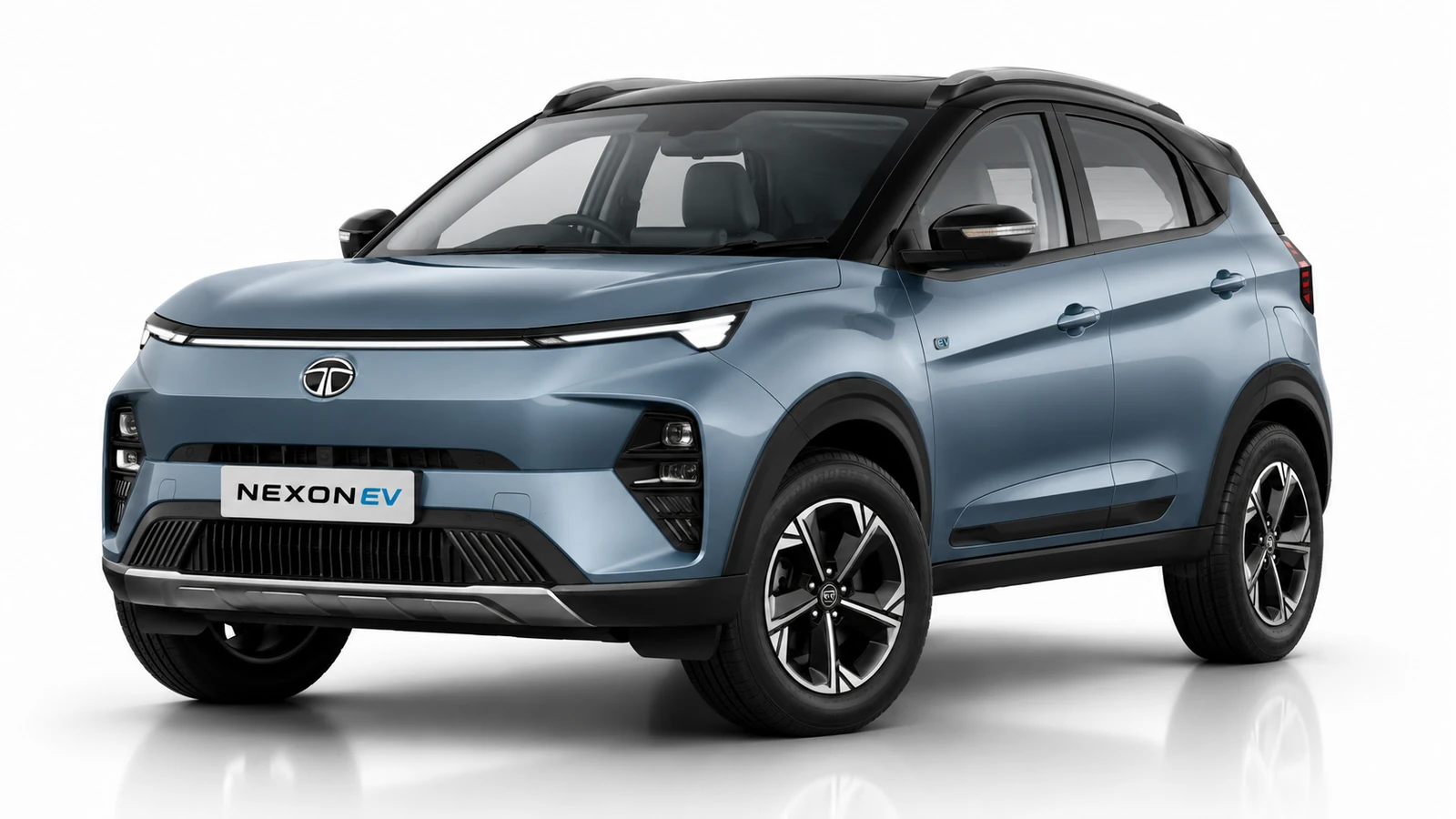
Tata Nexon EV
Tata Nexon EV overview
The Tata Nexon EV is an electric SUV from Tata, priced from ₹12.49 L – ₹17.49 L (ex-showroom, indicative). It pairs a 45 kWh battery with a claimed range of 325 km and 142 bhp of power. DC fast charging tops it up from 10–80% in about 40 minutes. It seats 5, drives the FWD wheels, and hits a top speed of 150 km/h. At ₹8 a unit the Tata Nexon EV works out at roughly ₹1.60 per kilometre, against about ₹5.00 for an equivalent petrol car.
Full specifications
Tata Nexon EV on-road price by city
Ex-showroom is only part of what you pay. On-road price adds RTO registration, road tax, insurance and TCS — and it varies by state, because EV road tax exemptions differ. Pick your city for the full breakdown:
Delhi · Mumbai · Bangalore · Hyderabad · Chennai · Pune · Ahmedabad · Kolkata · Jaipur · Lucknow
Pros & cons
👍 What's good
- Value-focused pricing
- Wide service & charging network in India
- Proven, popular choice among Indian buyers
👎 Watch-outs
- Charging infrastructure still growing in some cities
- Higher upfront cost than petrol equivalents
Frequently asked questions
The Tata Nexon EV is priced from ₹12.49 L – ₹17.49 L ex-showroom (indicative, 2026).
It offers a claimed range of 325 km from its 45 kWh battery. Real-world range is typically 70–85% of this.
Yes — DC fast charging takes it from 10% to 80% in about 40 minutes.
On a home tariff of ~₹8/unit it costs roughly ₹1–1.5 per km — far less than a petrol equivalent at ₹6–8 per km.
Similar electric cars


Not sure if this is the one?
Not sure the Tata Nexon EV is the one? The 60-second finder matches a shortlist to your budget and the way you actually drive.
Find my EV →What these numbers mean if you actually buy one
The Nexon EV is the car most Indian EV shortlists start with, and the specification that decides whether it suits you is not the one people quote. Here is what the published figures translate into day to day.
325 km claimed is a 235–260 km car
The 45 kWh pack’s 325 km is the certified figure, and like every certified figure in India it is measured in conditions you will not drive in. Apply the realistic band of roughly 72–80% and you get about 235–260 km of usable range, with the lower end on highway runs with the air conditioning working. The method behind that band is published in full.
For a 40 km daily commute, that is a charge every five days and the range question is settled. For a weekly 250 km round trip, it is one charging stop or a careful plan. For regular 400 km highway days, this is the wrong car and no amount of brochure range changes that.
What it costs to run
Filling the 45 kWh pack from empty draws roughly 49–50 units at the meter once you allow about 10% for charging losses. At a domestic tariff of ₹8 a unit that is near ₹400 for a full charge, which across a realistic 245 km works out at roughly ₹1.6 per kilometre. A comparable petrol SUV runs closer to ₹5. On 1,000 km a month, the gap is about ₹3,400 — and that gap is what pays back the price premium over a petrol Nexon. Put your own tariff into the running-cost calculator rather than taking the ₹8 assumption on trust; the number moves a lot by state and by slab.
40 minutes is the figure to argue about
DC fast charging from 10–80% takes about 40 minutes. That is unremarkable for a city car and is the Nexon EV’s weakest number against newer rivals: there are now cars at a similar price that do the same job in around 20 minutes. If you charge at home every night and take the occasional long drive, 40 minutes is a non-issue. If you drive highways most weekends, those twenty minutes repeat on every trip and are worth shopping for — the fastest-charging EVs list ranks the current line-up on exactly this.
Who the Nexon EV suits
- City families with home charging. This is the core case and the car is very good at it. Overnight AC charging, a 40–60 km day, no range anxiety ever.
- First-time EV buyers who want service reach. Tata’s network is among the widest in the country, which matters more in a tier-two city than any specification.
- Buyers who want a familiar shape. It drives like the petrol Nexon people already know, which lowers the leap considerably.
Who should look elsewhere
- Regular highway drivers. The combination of a 45 kWh pack and a 40-minute DC stop makes long trips a plan rather than a drive.
- Anyone without a parking slot they control. True of every EV, but worth repeating: without home charging the running-cost case weakens sharply, because public DC charging costs several times what home charging does.
- Buyers chasing the fastest charging at this price. Several newer rivals are materially quicker, and that is a real difference rather than a spec-sheet one.
What to check before you book
- Which pack the quoted price is for. The Nexon EV is sold in more than one battery size and the advertised figure is for the smaller one. The range you read about and the price you were quoted usually belong to different variants.
- Your society’s charging approval, in writing. Settle this before you pay a booking amount, not after.
- The battery warranty threshold. Read the capacity percentage in the booklet for your variant, and whether the cover transfers to a second owner — that clause affects resale. Why that threshold matters.
- Your nearest service centre. Confirm it handles EVs specifically, not just Tata cars.
- The on-road figure for your state. Road tax and registration waivers vary, and can move the real price by a lakh.
If you are weighing this against a specific rival, the comparison tool puts any two EVs side by side on battery, range, charging time and price.