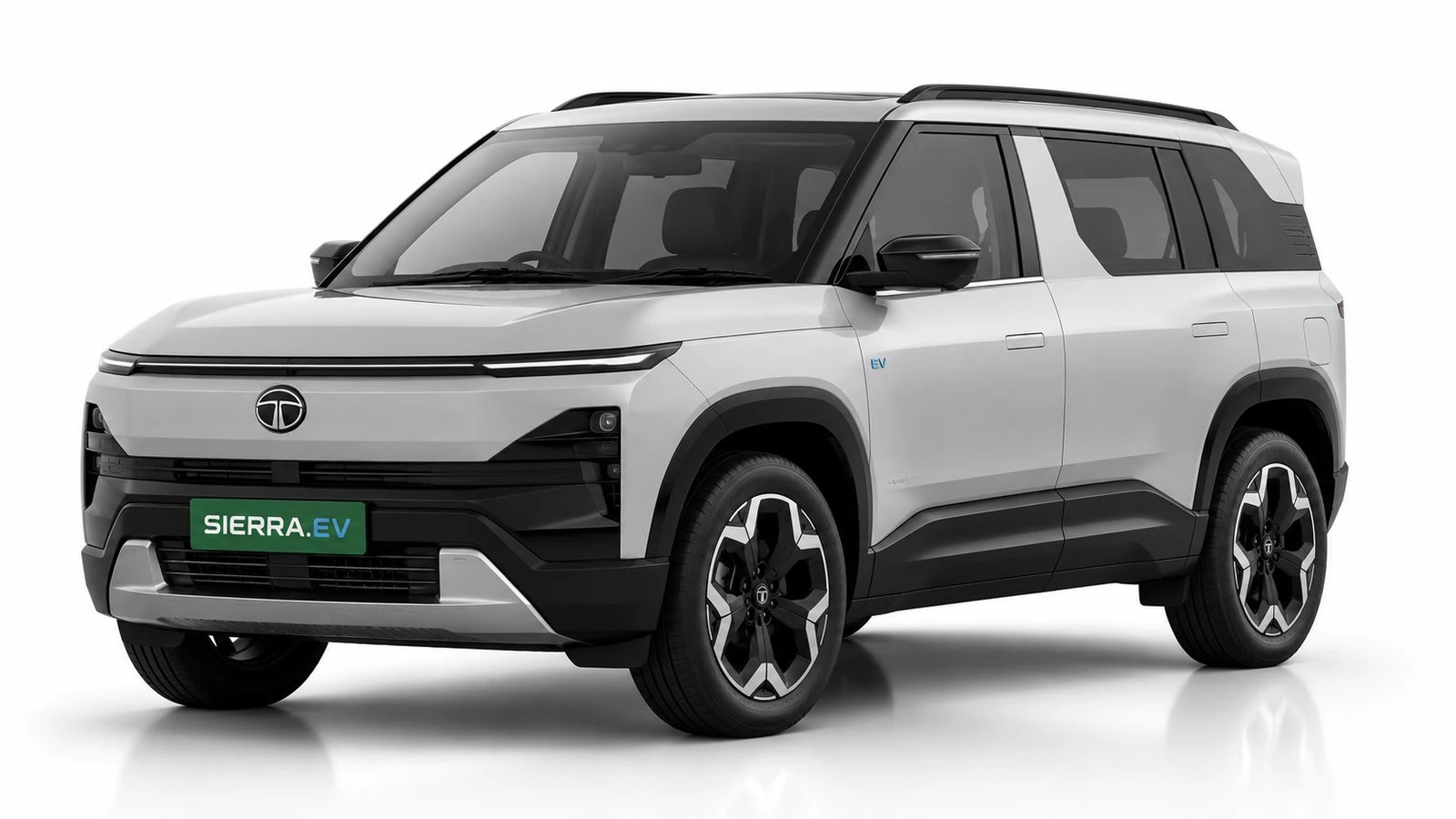
Tata Sierra EV
Tata Sierra EV overview
The Tata Sierra EV is an electric SUV from Tata, priced from ₹18.79 L – ₹25.00 L (ex-showroom, indicative). It pairs a 65 kWh battery with a claimed range of 665 km and 280 bhp of power. DC fast charging tops it up from 10–80% in about 30 minutes. It seats 5, drives the AWD wheels, and hits a top speed of 170 km/h. At ₹8 a unit the Tata Sierra EV works out at roughly ₹1.31 per kilometre, against about ₹5.00 for an equivalent petrol car.
Full specifications
Tata Sierra EV on-road price by city
Ex-showroom is only part of what you pay. On-road price adds RTO registration, road tax, insurance and TCS — and it varies by state, because EV road tax exemptions differ. Pick your city for the full breakdown:
Delhi · Mumbai · Bangalore · Hyderabad · Chennai · Pune · Ahmedabad · Kolkata · Jaipur · Lucknow
Pros & cons
👍 What's good
- Long claimed range of 665 km
- Quick DC fast charging (10–80% in ~30 min)
- Strong performance (280 bhp)
- Wide service & charging network in India
👎 Watch-outs
- Not on sale yet — upcoming launch
- Higher upfront cost than petrol equivalents
Frequently asked questions
The Tata Sierra EV is priced from ₹18.79 L – ₹25.00 L ex-showroom (indicative, 2026).
It offers a claimed range of 665 km from its 65 kWh battery. Real-world range is typically 70–85% of this.
Yes — DC fast charging takes it from 10% to 80% in about 30 minutes.
On a home tariff of ~₹8/unit it costs roughly ₹1–1.5 per km — far less than a petrol equivalent at ₹6–8 per km.
Similar electric cars
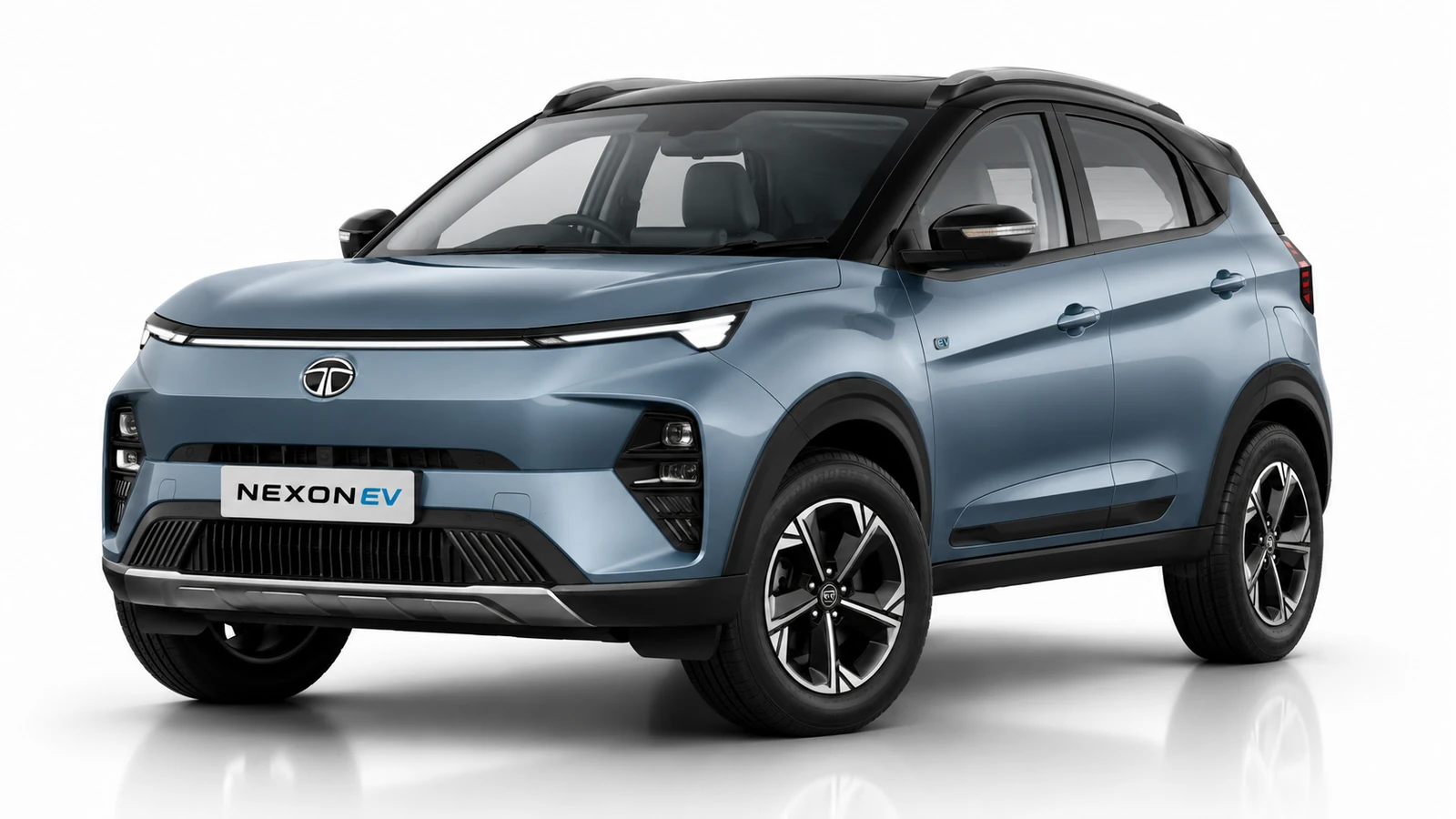
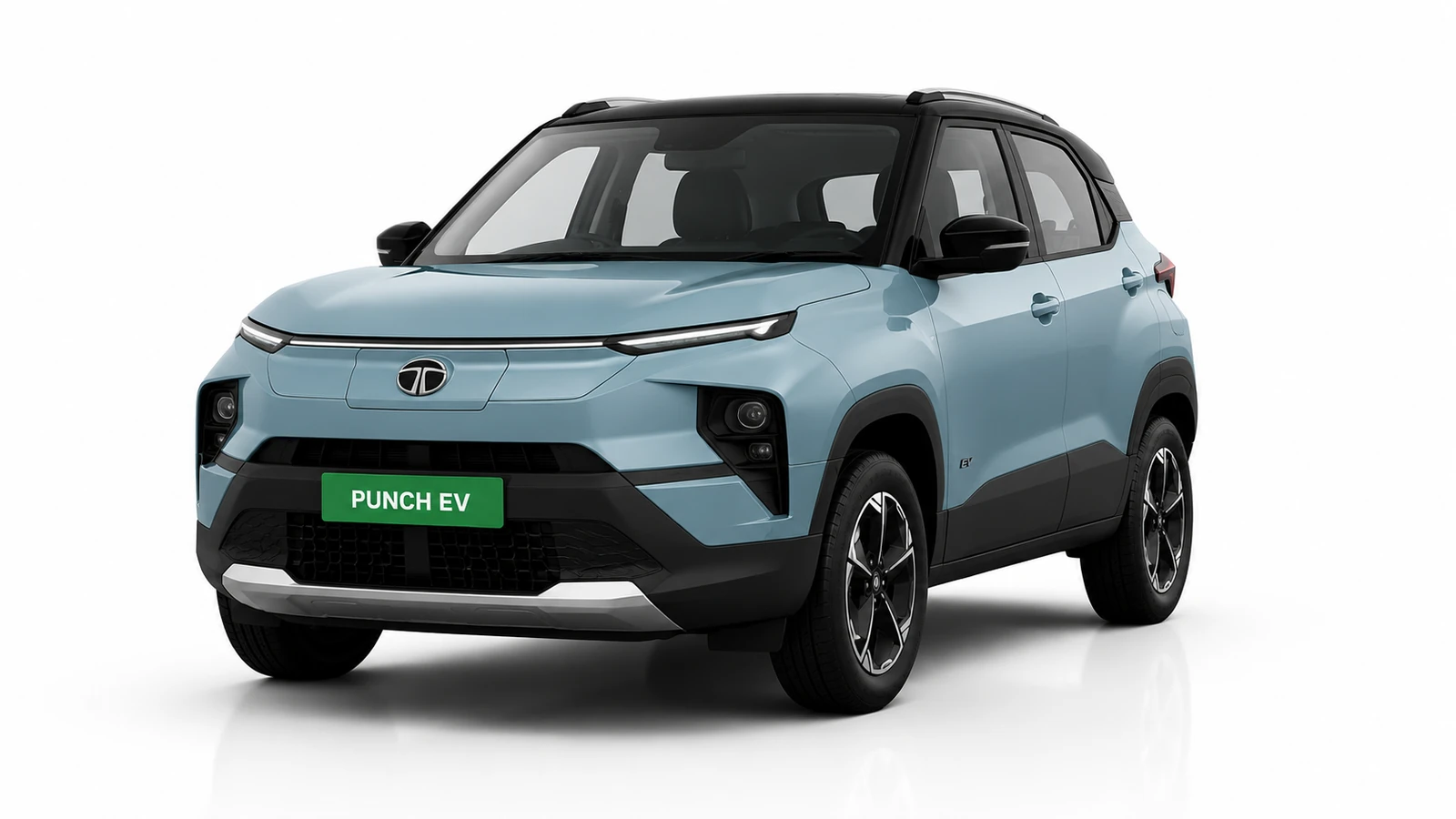
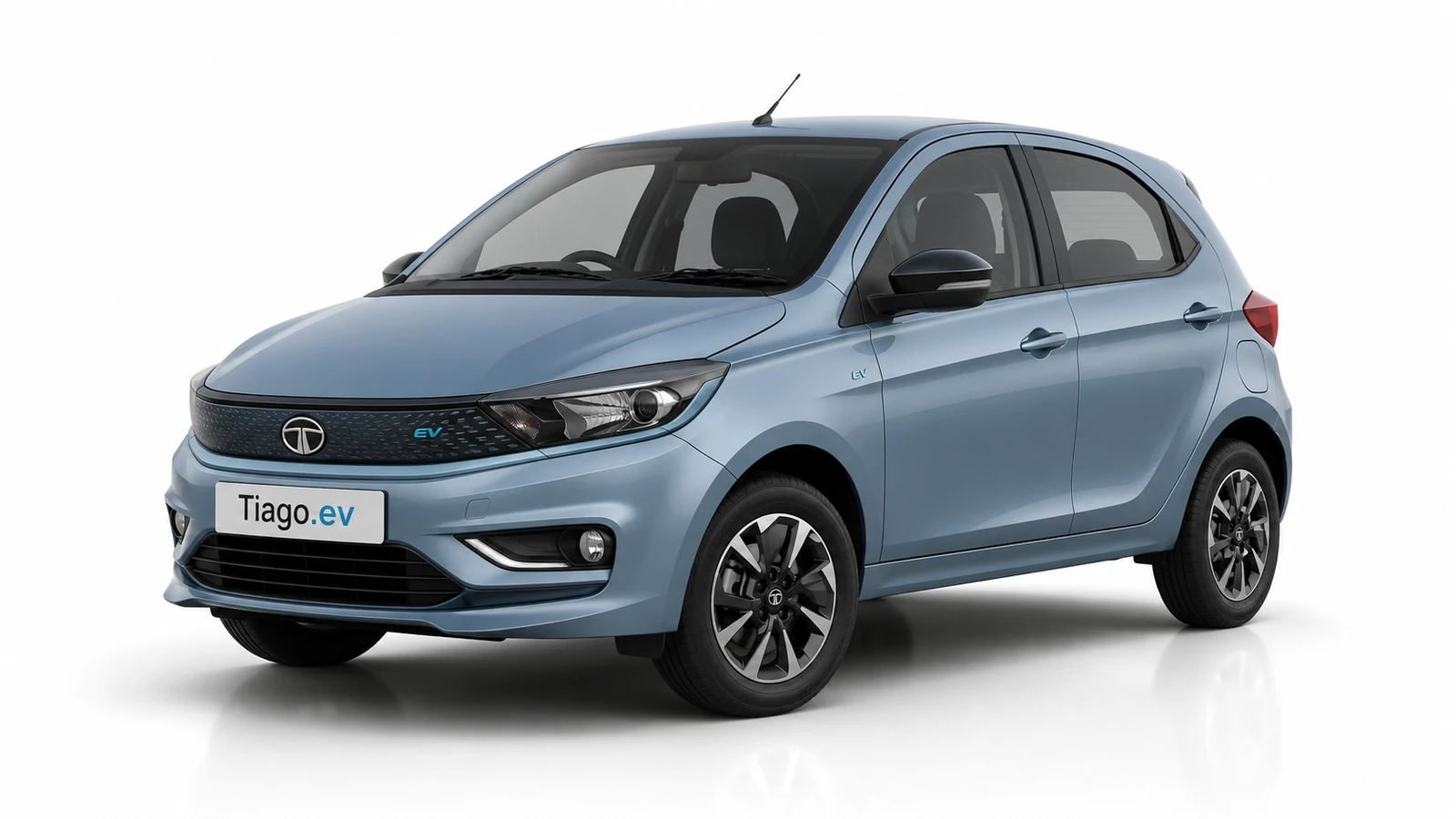
Not sure if this is the one?
Not sure the Tata Sierra EV is the one? The 60-second finder matches a shortlist to your budget and the way you actually drive.
Find my EV →Two battery packs, two different cars
The Sierra EV is sold with a 63 kWh pack and a 75 kWh pack, and treating it as one car is the fastest way to misread it. The headline ₹18.79 lakh is the 63 kWh Pure variant. The 665 km claimed range that gets quoted belongs to the 75 kWh rear-wheel-drive version, several variants and several lakh higher up the range, which tops out at ₹25.99 lakh. Those two numbers are almost never true at the same time, and a great many comparisons put them together anyway.
There is a third configuration: a dual-motor all-wheel-drive version of the 75 kWh pack, which claims 624 km. Lower than the rear-drive car, which is normal — a second motor costs range.
What 665 km means on a real highway
It is a claimed figure, measured on a test cycle. Applying the realistic band of roughly 72–80% puts the 75 kWh car at about 480–530 km in ordinary use, and nearer the bottom of that at sustained highway speed with the air conditioning running. The method behind the band is published here.
Even at the pessimistic end, that is genuinely long-distance capability. Delhi to Jaipur, Mumbai to Pune and back, Bengaluru to Mysuru and back — these stop being journeys you plan around charging and become journeys you just drive.
Charging: 26 minutes, and read the window
Tata’s claim is 20–80% in about 26 minutes on a DC fast charger. Note the window: 20 to 80, not 10 to 80, so it is not directly comparable with a 10–80% figure quoted for another car — the honest comparison is window to window. Either way it puts the Sierra EV among the quicker cars on sale here, and on a long drive that is the specification that decides how the day feels.
What it costs to run
Filling the 75 kWh pack from empty draws roughly 82–83 units at the meter once you allow about 10% for charging losses. At ₹8 a unit that is about ₹660 for a full charge; across a realistic 500 km that is roughly ₹1.3 per kilometre, against about ₹5 for a comparable petrol SUV. The bigger pack is not more expensive per kilometre — it is simply a larger fill. Put your own tariff into the running-cost calculator, because slab rates change the answer by more than most people expect.
Who it suits
- Buyers who actually do long drives. This is the Sierra EV’s real argument. If your use case is a 40 km commute, you are paying for range you will never use.
- Families wanting one car for everything. A five-seat electric SUV with this kind of range and charging speed covers the weekday and the weekend without a second vehicle.
- People who want Tata’s service reach. Still one of the widest networks in India, which matters outside the metros.
Who should think twice
- City-only buyers. At ₹18.79 lakh and up, a smaller EV does the city job for a lot less. Range you do not use is money spent on weight.
- Anyone shopping on the headline price. The ₹18.79 lakh car is the 63 kWh Pure. The specification most people picture is several lakh higher.
- Buyers without home charging. A 75 kWh pack filled at public DC rates is an expensive habit.
Before you book
- Confirm the pack and drivetrain on your quote. 63 or 75 kWh, rear-wheel or all-wheel drive — these change both the price and the range materially.
- Get society approval for a charge point in writing. A 75 kWh pack on a 3.3 kW portable cable is an overnight-and-then-some proposition; this car wants a 7.2 kW wallbox.
- Read the battery warranty threshold and whether it transfers to a second owner, which affects resale. Why that clause matters.
- Check your state’s road tax and registration position. On a car at this price, a waiver is worth a great deal.
To weigh it against a specific rival, the comparison tool puts any two EVs side by side, and the fastest-charging EVs list ranks the cars that spend the least time plugged in.
Specifications above are as published by Tata Motors. Range figures are claimed, not measured by us; EVBharat does not road-test vehicles. Spotted an error? Tell us — corrections are handled ahead of everything else.