Cheapest electric cars in India (2026)
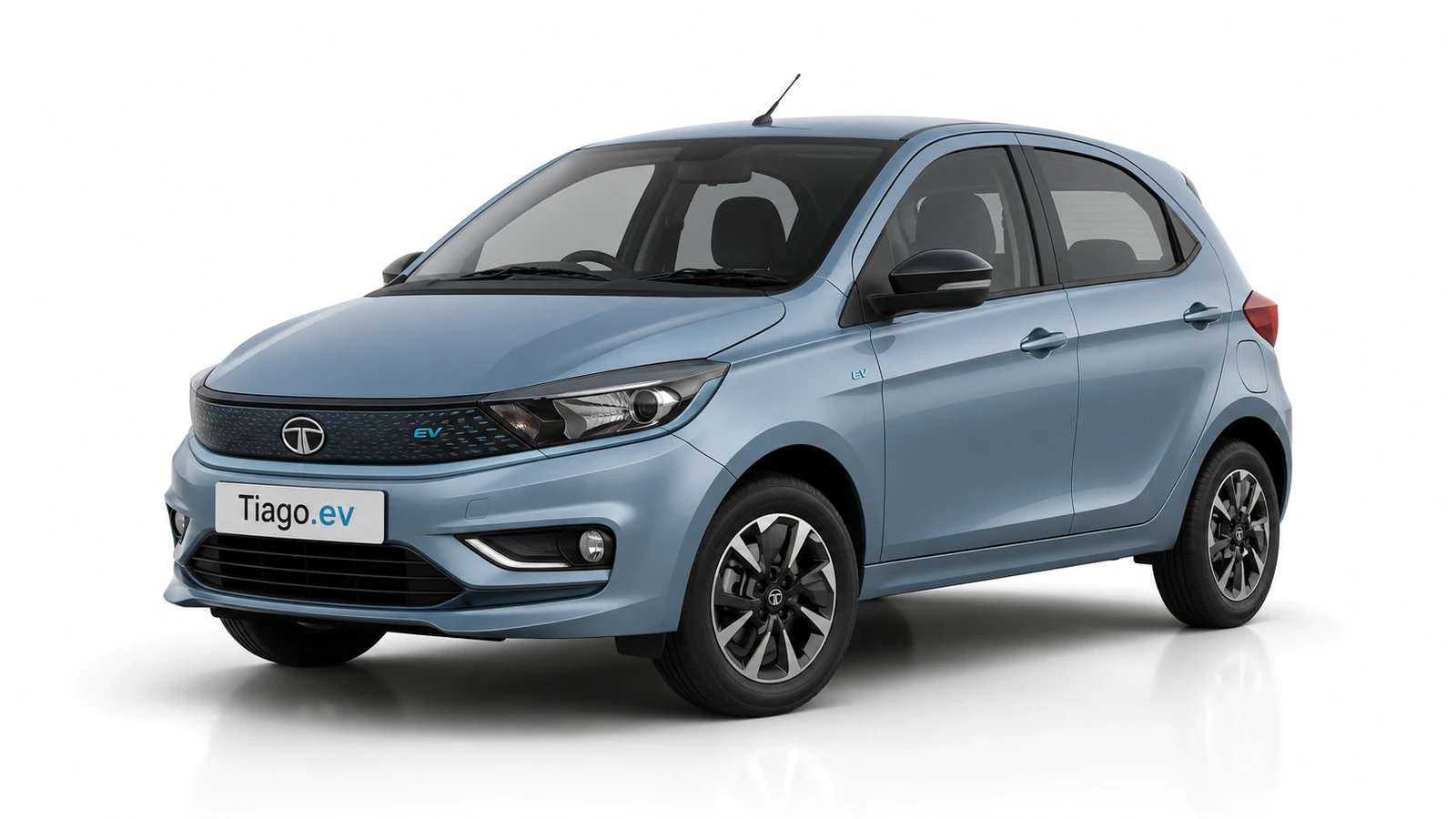
India's cheapest electric cars now start at ₹7.50 lakh. That is genuinely affordable territory — the same money buys a mid-spec petrol hatchback — but the trade-off is real and worth understanding before you sign anything. At this end of the market you are buying a smaller battery, and a smaller battery means less range and, in two cases, no DC fast charging at all.
The six cheapest electric cars on sale
| Model | Price (ex-showroom) | Claimed range | Real-world range | Battery | Seats |
|---|---|---|---|---|---|
| MG Comet EV | ₹7.50L – ₹9.56L | 230 km | 165–184 km | 17.3 kWh | 4 |
| Tata Tiago EV | ₹7.99L – ₹11.14L | 250 km | 180–200 km | 24 kWh | 5 |
| Tata Punch EV | ₹9.69L – ₹14.44L | 315 km | 226–252 km | 35 kWh | 5 |
| Citroen eC3 | ₹11.61L – ₹13.41L | 320 km | 230–256 km | 29.2 kWh | 5 |
| Tata Tigor EV | ₹12.49L – ₹13.75L | 315 km | 226–252 km | 26 kWh | 5 |
| MG Windsor EV | ₹12.65L – ₹18.39L | 449 km | 323–359 km | 52.9 kWh | 5 |
What you actually get at each price
MG Comet EV — ₹7.50L – ₹9.56L
The cheapest EV in India and the only one designed purely for the city. It is a four-seater, 17.3 kWh, 230 km claimed, and it tops out at 100 km/h. Critically, it has no DC fast charging — you charge it at home overnight and that is the whole plan. If you have a parking spot with a socket and your driving is school run, office, market, it is a remarkably sensible purchase. If you do not, look elsewhere.
Tata Tiago EV — ₹7.99L – ₹11.14L
The value pick of the segment and the one most people should shortlist first. 250 km claimed from a 24 kWh pack, real-world 180–200 km, and it does support DC fast charging — roughly 58 minutes for a 10–80% top-up. Five seats, a normal hatchback footprint, and Tata's service network, which at this price point matters more than any spec.
Tata Punch EV — ₹9.69L – ₹14.44L
The first car on this list that works as an only car. 315 km claimed, 35 kWh, higher ground clearance and a more substantial feel than the Tiago. It is India's best-selling electric car for a reason. If your budget stretches to ₹10–12 lakh, this is where the segment stops feeling like a compromise.
Citroen eC3 — ₹11.61L – ₹13.41L
320 km claimed and a genuinely comfortable ride over broken roads — Citroen's suspension tuning is the standout here. The catch is the service network, which is thin outside metros. Buy it if there is a dealer you can reach; skip it if there is not.
Tata Tigor EV — ₹12.49L – ₹13.75L
A sedan body on essentially Tiago mechanicals, with a slightly larger 26 kWh pack and 315 km claimed. It has found its market almost entirely in fleet and commercial use, which is worth knowing: parts and service are well sorted, but resale is driven by fleet demand rather than private buyers.
MG Windsor EV — ₹12.65L – ₹18.39L
Not the cheapest, but it belongs here because MG's battery-rental scheme lets you buy the car without the battery and pay per km instead, which drops the entry price sharply. The car itself is the most spacious on this list, with 449 km claimed from 52.9 kWh. Read the rental terms carefully — they affect resale.
The question that decides this segment
Can you charge where you park? Every car on this list is built around the assumption that you can. Small batteries recover slowly on AC charging, and two of these six cannot fast-charge at all. If you rely on public DC chargers, an affordable EV becomes a daily inconvenience rather than a saving — and the cost per km roughly triples, from around ₹1 to around ₹3.
If you can charge at home, any of these will cost you ₹0.90–1.30 per km against ₹6–8 for petrol. Over 1,200 km a month that is roughly ₹6,000–8,000 saved, which is what makes the maths work at this price.
Work out your own numbers
Enter your daily km and get your 5-year cost, savings and break-even in 30 seconds.
Open the calculator →Our picks
- Best overall value: Tata Tiago EV — fast charging, five seats, real range, sane price.
- Best if it is your only car: Tata Punch EV — enough range and ground clearance to not think about it.
- Best pure city car: MG Comet EV — but only with home charging.
- Best ride quality: Citroen eC3 — if a dealer is within reach.
Related guides
- Best electric cars under ₹15 lakh
- Best electric cars for city driving
- EV vs petrol: the real 5-year cost
- What it costs to charge an EV in India
- EV subsidies by state
- Browse all electric vehicles in India
Frequently asked questions
Prices are ex-showroom and indicative. Range figures are manufacturer-claimed unless stated otherwise; real-world range in Indian conditions is typically 72–80% of claimed. Costs vary by state tariff, fuel price and driving style. Last updated 26 August 2026.