
Maruti eMPV (2026)
Maruti eMPV (2026) overview
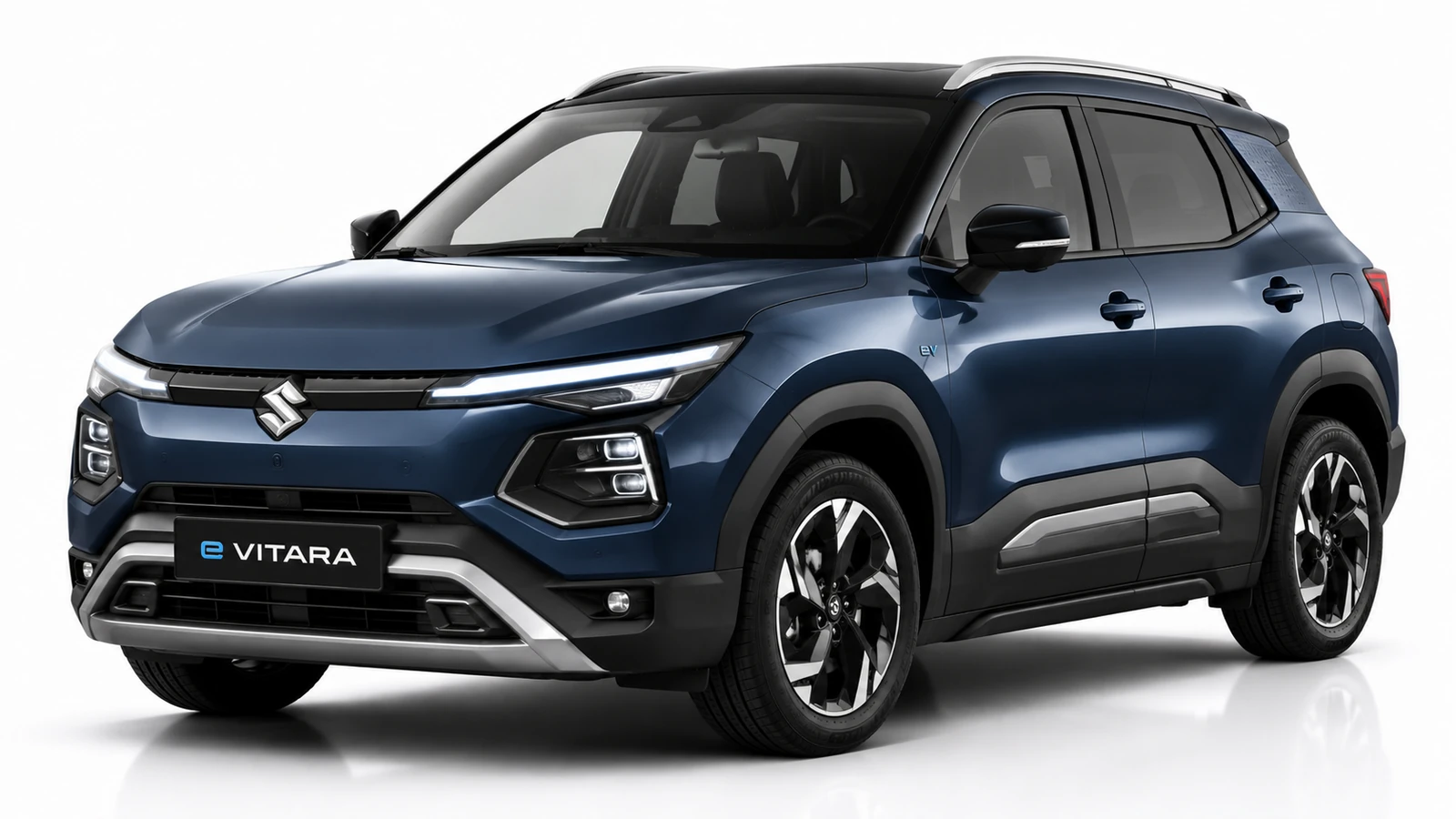
The Maruti eMPV (2026) is an electric MPV from Maruti Suzuki, priced from ₹20.00 L – ₹25.00 L (ex-showroom, indicative). It pairs a 61 kWh battery with a claimed range of 500 km and 172 bhp of power. DC fast charging tops it up from 10–80% in about 45 minutes. It seats 7, drives the FWD wheels, and hits a top speed of 150 km/h. At ₹8 a unit the Maruti eMPV (2026) works out at roughly ₹1.41 per kilometre, against about ₹5.00 for an equivalent petrol car.
Full specifications
Pros & cons
👍 What's good
- Long claimed range of 500 km
- Spacious 7-seat cabin
- Wide service & charging network in India
👎 Watch-outs
- Not on sale yet — upcoming launch
- Higher upfront cost than petrol equivalents
Frequently asked questions
The Maruti eMPV (2026) is priced from ₹20.00 L – ₹25.00 L ex-showroom (indicative, 2026).
It offers a claimed range of 500 km from its 61 kWh battery. Real-world range is typically 70–85% of this.
Yes — DC fast charging takes it from 10% to 80% in about 45 minutes.
On a home tariff of ~₹8/unit it costs roughly ₹1–1.5 per km — far less than a petrol equivalent at ₹6–8 per km.
Similar electric cars


Not sure if this is the one?
Not sure the Maruti eMPV (2026) is the one? The 60-second finder matches a shortlist to your budget and the way you actually drive.
Find my EV →EVBharat analysis: what these numbers mean
The Maruti eMPV (2026) is listed at 61.0 kWh with a claimed 500 km. Those two numbers drive everything below, which is arithmetic from Maruti Suzuki’s published specification rather than a road test — we do not test vehicles.
| Claimed range | 500 km (Maruti Suzuki figure) |
| Realistic range | about 360–400 km |
| Units for a full charge | about 67.1 (61.0 kWh plus charging loss) |
| Cost of a full charge | about ₹537 at ₹8 per unit |
| Running cost | about ₹1.41 per km |
At a realistic 360–400 km, the Maruti eMPV (2026) is a genuine long-distance vehicle. Most intercity runs from a metro become a drive rather than a plan, which is the point at which range stops being the thing you shop on.
At a claimed 45 minutes on a DC fast charger, the Maruti eMPV (2026) is slow by current standards — there are cars at similar money doing the same job in half the time. If you drive highways regularly, that is the specification to shop against.
Over 1,000 km in a month the Maruti eMPV (2026) costs roughly ₹1413 in electricity at ₹8 a unit, against about ₹5000 of petrol for an equivalent car. That is ₹3587 a month and ₹43048 a year. Take the price difference you are actually quoted for the Maruti eMPV (2026) against the petrol car you would otherwise buy, divide by ₹43048, and you have your own break-even in years — which is a far more useful number than any per-kilometre figure.
Filling the Maruti eMPV (2026)’s 61.0 kWh pack from empty draws about 67.1 units at the meter once charging losses are counted — roughly 20 hours on the 3.3 kW portable charger supplied with most cars, or about 9 hours on a 7.2 kW wallbox. On the Maruti eMPV (2026) that gap is the practical argument for a wallbox — and all of it assumes you can plug in where you park.
Realistic range applies the 72–80% band set out in how we estimate real-world range, and ₹8 a unit is an assumption rather than your tariff — the calculator takes your own.
Maruti eMPV (2026) specifications as published by Maruti Suzuki; range is claimed, not measured by us. Tell us if anything here is wrong.