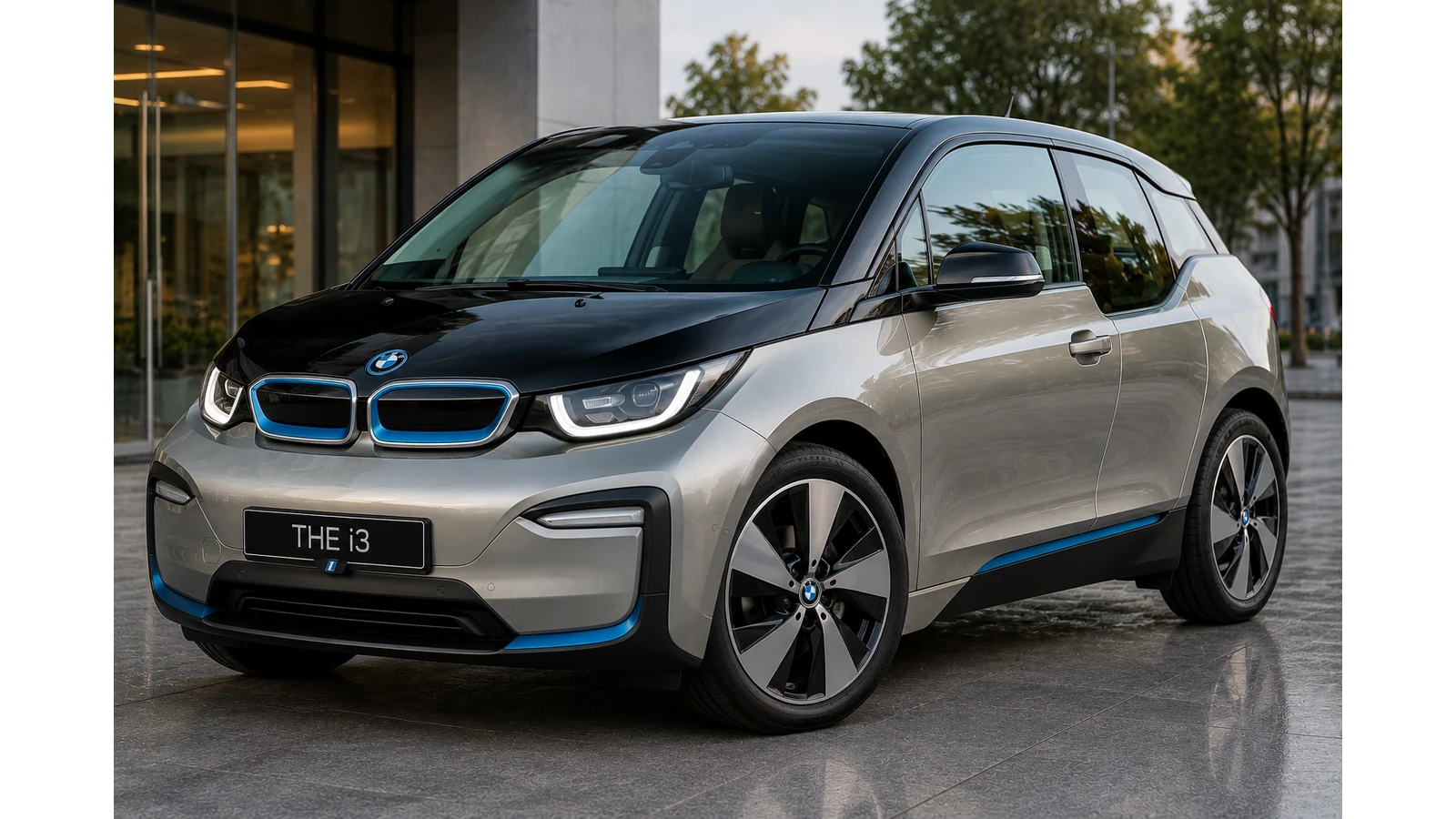
BMW i3
BMW i3 overview
The BMW i3 is an electric hatchback from BMW, priced from ₹55.00 L – ₹60.00 L (ex-showroom, indicative). It pairs a 42 kWh battery with a claimed range of 400 km and 168 bhp of power. DC fast charging tops it up from 10–80% in about 35 minutes. It seats 4, drives the RWD wheels, and hits a top speed of 150 km/h. At ₹8 a unit the BMW i3 works out at roughly ₹1.22 per kilometre, against about ₹5.00 for an equivalent petrol car.
Full specifications
Pros & cons
👍 What's good
- Healthy 400 km claimed range
- Quick DC fast charging (10–80% in ~35 min)
👎 Watch-outs
- Premium pricing
- Higher upfront cost than petrol equivalents
Frequently asked questions
The BMW i3 is priced from ₹55.00 L – ₹60.00 L ex-showroom (indicative, 2026).
It offers a claimed range of 400 km from its 42 kWh battery. Real-world range is typically 70–85% of this.
Yes — DC fast charging takes it from 10% to 80% in about 35 minutes.
On a home tariff of ~₹8/unit it costs roughly ₹1–1.5 per km — far less than a petrol equivalent at ₹6–8 per km.
Similar electric cars
Not sure if this is the one?
Not sure the BMW i3 is the one? The 60-second finder matches a shortlist to your budget and the way you actually drive.
Find my EV →EVBharat analysis: what these numbers mean
The BMW i3 is listed at 42.0 kWh with a claimed 400 km. Those two numbers drive everything below, which is arithmetic from BMW’s published specification rather than a road test — we do not test vehicles.
| Claimed range | 400 km (BMW figure) |
| Realistic range | about 288–320 km |
| Units for a full charge | about 46.2 (42.0 kWh plus charging loss) |
| Cost of a full charge | about ₹370 at ₹8 per unit |
| Running cost | about ₹1.22 per km |
A realistic 288–320 km puts the BMW i3 well clear of daily driving and makes a long day out a one-stop affair rather than a logistics exercise.
The BMW i3 claims about 35 minutes on a DC fast charger, which is mid-market. Fine for the occasional long drive; noticeable if you do one every weekend, because that wait repeats on every trip.
Over 1,000 km in a month the BMW i3 costs roughly ₹1216 in electricity at ₹8 a unit, against about ₹5000 of petrol for an equivalent car. That is ₹3784 a month and ₹45411 a year. Take the price difference you are actually quoted for the BMW i3 against the petrol car you would otherwise buy, divide by ₹45411, and you have your own break-even in years — which is a far more useful number than any per-kilometre figure.
Filling the BMW i3’s 42.0 kWh pack from empty draws about 46.2 units at the meter once charging losses are counted — roughly 14 hours on the 3.3 kW portable charger supplied with most cars, or about 6 hours on a 7.2 kW wallbox. On the BMW i3 that gap is the practical argument for a wallbox — and all of it assumes you can plug in where you park.
Realistic range applies the 72–80% band set out in how we estimate real-world range, and ₹8 a unit is an assumption rather than your tariff — the calculator takes your own.
BMW i3 specifications as published by BMW; range is claimed, not measured by us. Tell us if anything here is wrong.